Crayfish Fishing on Vancouver Island:
Complete Guide to Traps, Bait, Locations & BC
Regulations
A comprehensive field guide to catching native signal crayfish across Vancouver Island’s freshwater lakes,
rivers, and streams — covering legal traps, permitted baits, habitat scouting, and BC regulations.
Daily Quota: 25 Crayfish
Trapping for Personal Use
BC Freshwater Licence (16+)
Field Guide Overview
Crayfish Trapping on Vancouver Island
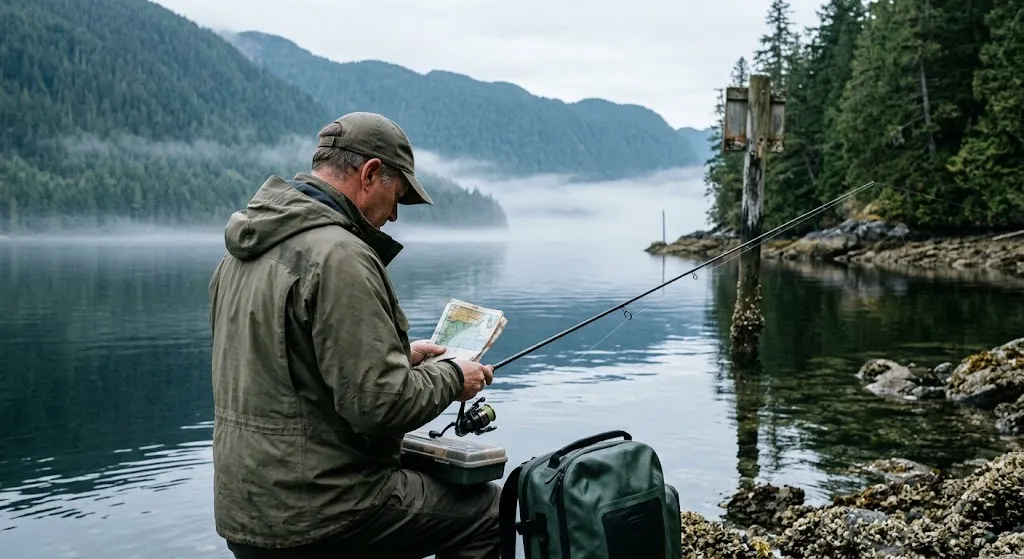
If you want to catch crayfish on Vancouver Island, the first step is knowing where to look, how to choose a
suitable trap, and which freshwater fishing regulations apply. The island offers a variety of freshwater
habitats, including lakes, rivers, and streams, where signal crayfish may be found.
Crayfish fishing, also known as crawfish or crawdad fishing, can be a rewarding outdoor activity for beginners
and experienced anglers alike. However, finding a suitable location is only part of the process. You also need
to understand bait restrictions, licence requirements, daily quotas, responsible harvesting practices, and the
rules governing the transport of live aquatic animals.
This guide covers everything you need to plan a crayfish fishing trip on Vancouver Island, from identifying
signal crayfish and selecting a trap to researching local fishing locations and preparing your catch for food.
Before You Go: Essential BC Freshwater Rules
British Columbia's freshwater fishing regulations generally permit crayfish trapping for personal
consumption. The provincial regulations synopsis lists a daily quota of 25 crayfish and
recommends releasing individuals under 9 cm in total length, along with those carrying eggs or young.
These recommendations should not be confused with a universal legal minimum size. Always check the current
rules for your chosen waterbody before setting a trap.
Crayfish fishing involves catching small freshwater crustaceans using an approved trap in suitable aquatic
habitats. Crayfish are related to lobsters and crabs, but they are adapted to freshwater environments rather
than the coastal marine habitats associated with saltwater crabbing.
In British Columbia, the signal crayfish (Pacifastacus leniusculus) is a familiar freshwater
species. It is native to western North America and occurs in parts of British Columbia, including freshwater
environments where local conditions support its population.
Crayfish spend much of their time near the bottom of a waterbody, where they can find food and shelter.
Rocks, submerged branches, aquatic vegetation, and other underwater structures may provide suitable habitat.
For people interested in outdoor activities on Vancouver Island, crayfish trapping offers a different
experience from conventional fishing for salmon or trout. Instead of casting a rod and targeting fish,
anglers use a trap to capture crayfish while following the applicable freshwater fishing rules.
Before planning your trip, it is important to distinguish freshwater crayfish fishing from marine crabbing.
The two activities involve different species, habitats, licences, equipment considerations, and regulations.
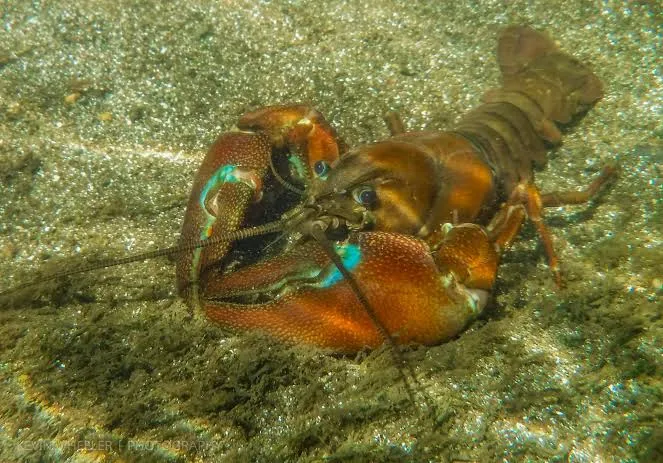
Signal Crayfish (Pacifastacus leniusculus): Native to western North America and
adapted specifically to freshwater lakes and streams.
Species Anatomy & Identification
How to Identify Signal Crayfish in British Columbia
Signal crayfish have several recognisable characteristics that distinguish them in British Columbia freshwater
environments:
Target
Freshwater Species
Signal Crayfish
Pacifastacus leniusculus
Freshwater
Native
Distinctive white/turquoise patch: Signal crayfish often have a
distinctive pale whitish or turquoise-toned marking at the hinge base of the claws.
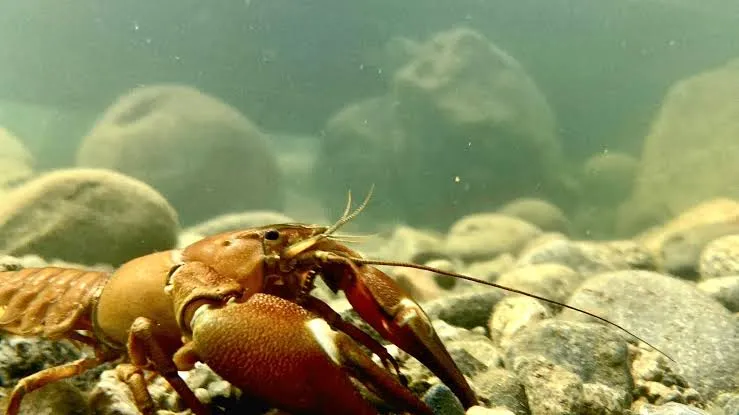
Pincers & Shell: Two large front claws used for feeding and
defence, protected by a rigid exoskeleton.
Key Recognisable Characteristics
1
Two large claws: Their front legs end in prominent pincers
used for feeding, defence, and handling food.
2
A hard outer shell: Their bodies are protected by a rigid
exoskeleton.
3
A segmented abdomen: The body ends in a broad tail fan
that helps the crayfish move backwards rapidly through the water.
4
A pale patch near the claw hinge: Signal crayfish often
have a distinctive whitish or turquoise-toned marking at the base of the claws.
5
Variable body colour: Their colour can range from brown to
olive or blue-brown, depending on the individual and environmental conditions.
Important: Signal crayfish may resemble small lobsters, but their freshwater habitat
distinguishes them from marine crustaceans commonly harvested along the British Columbia coast. Do not rely
on colour alone when identifying a crayfish. If you are uncertain about the species, photograph it for
identification and consult a reliable species reference before deciding whether to keep it.
If you are researching where to catch crayfish on Vancouver Island, start with freshwater lakes, rivers, and
streams that provide suitable habitat and legal access.
Crayfish are often associated with areas where they can find cover and food. However, not every lake or stream
supports a healthy crayfish population, and the presence of suitable habitat does not automatically mean that
harvesting is permitted.
1
Rocky Shorelines &
Underwater Cover
Rocky margins, submerged branches, gaps between stones, and other structures can provide shelter for
crayfish. When researching a potential fishing location, consider whether the shoreline has accessible areas
where a trap can be placed securely. Avoid damaging aquatic vegetation or disturbing sensitive habitat.
2
Research Freshwater
Lakes
Lakes can offer opportunities to investigate crayfish habitat, particularly around accessible shorelines and
areas with submerged structures. Before choosing a lake, check whether it is open to the public, whether
surrounding land permits access, and whether local fishing restrictions apply.
3
Investigate Suitable
Rivers & Streams
Some rivers and streams provide habitat for crayfish, especially around slower-moving sections and areas
with suitable shelter. Fast currents can make trap placement unsafe or impractical. Check applicable bait
restrictions and ensure gear can be retrieved without creating a hazard.
Which Areas of Vancouver Island Should You Research?
The following communities are useful starting points for researching freshwater access and outdoor
opportunities. They are not verified crayfish fishing hotspots, and their inclusion does not confirm that
crayfish are present or that harvesting is permitted at a particular waterbody.
Freshwater Research Area
Nanaimo and
Surrounding Area
Research freshwater lakes and accessible shorelines around Nanaimo. Confirm the exact waterbody,
public access, habitat suitability, and any local restrictions before planning a trip.
Verify public shoreline access and specific lake regulations.
Freshwater Research Area
Cowichan Valley
Explore information about freshwater access and habitat in the Cowichan Valley. Check river
conditions, private property boundaries, and local rules before placing any equipment.
Check river current speed and private property boundaries.
Freshwater Research Area
Campbell River
Region
Research suitable freshwater environments around Campbell River, paying particular attention to access
conditions and any waterbody-specific restrictions.
Assess water levels, safe bank entry, and gear retrieval points.
How to Confirm Whether a Location Is Suitable
Before leaving home, work through these checks:
1. Identify the exact lake, river, or stream rather than relying on a general area name.
2. Confirm that the location provides lawful public access or that you have the required
permission.
3. Check the current freshwater fishing regulations and any applicable local restrictions.
4. Look for evidence that signal crayfish occur in the area, using reliable identification resources
or local ecological information.
5. Confirm that your trap and bait are permitted and suitable for the waterbody.
6. Check weather, water levels, shoreline conditions, and any relevant advisories.
Important: This guide does not verify specific crayfish fishing spots on Vancouver Island.
Check the exact waterbody before treating it as a confirmed destination. Consult the BC Freshwater Fishing Regulations
Synopsis for relevant regional or water-specific rules.
Local Industry Directory
Discover Fishing Businesses on Vancouver Island
Planning your next fishing adventure? Explore local Vancouver Island fishing charters, experienced guides,
lodges, and marine services to match your trip plans.
The basic process involves selecting a permitted trap, choosing legal bait, finding suitable habitat,
positioning the trap safely, and checking the catch against the applicable regulations.
British Columbia's freshwater regulations permit trapping crayfish for personal consumption. Other methods of
taking crayfish are prohibited under the general provincial rules. Always consult the current regulations
before fishing.
1
Step 1 • Equipment Selection
Choose a Suitable
Crayfish Trap
A crayfish trap is designed to allow crayfish to enter while reducing the chance of escape. Traps vary
in size, material, entrance design, and ease of retrieval. The provincial freshwater regulations
synopsis states that crayfish may be trapped using any number or size of traps for personal
consumption. Before buying equipment, check the rules for your chosen waterbody.
Entrance
design allowing easy entry and secure retention
Durable
materials suited for repeated freshwater submergence
Secure bait
storage and reliable retrieval line
2
Step 2 • Legal Bait Verification
Choose Bait That
Is Legal for the Waterbody
Bait can help attract crayfish, but bait restrictions in British Columbia depend on the type of bait
and the waterbody. The BC freshwater regulations synopsis restricts the use or possession of
freshwater invertebrates for bait at lakes, and generally prohibits using finfish or finfish parts.
Check official bait rules for your lake or stream.
Check
official bait restrictions for your specific waterbody
Select only
permitted baits (avoid prohibited finfish and aquatic insects)
Secure bait
inside a cage or pouch to keep it enclosed
3
Step 3 • Habitat & Deployment
Find Suitable
Habitat and Position the Trap
Crayfish use underwater cover to shelter and forage. When choosing where to place a trap, look for
rocky margins, submerged branches, and structures rather than simply dropping into the deepest water.
Avoid locations that obstruct boats, swimmers, or public access, and ensure the trap can be retrieved
safely.
Target
rocky shorelines, boulder crevices, and submerged timber
Ensure
stable bottom positioning without hazardous snags
Keep clear
of navigation channels and boat launch areas
4
Step 4 • Safe Handling & Bycatch
Check and
Retrieve Your Trap Safely
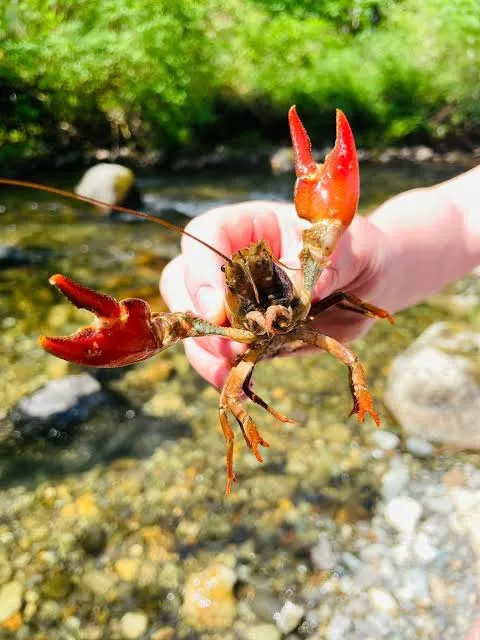
Retrieve your trap carefully and inspect its contents before deciding which crayfish to keep. Use
appropriate handling precautions because crayfish can pinch with their claws. If you catch a finfish
in the trap, release it as required by provincial regulations.
Pull line
steadily to keep catch secured inside the trap
Hold
crayfish behind the front claws to avoid pinching
Immediately
release any non-target finfish or bycatch unharmed
5
Step 5 • Quota & Conservation
Measure and Sort
Your Catch
Before keeping crayfish, review the daily quota (25 crayfish) and provincial recommendations for
releasing smaller individuals under 9 cm and those carrying eggs or young. Measure consistently from
the front of the rostrum to the end of the tail fan.
Measure
total length from head rostrum tip to end of tail fan
Release
specimens under 9 cm total length to sustain stocks
Always
release females carrying eggs or young immediately
Bait Selection & Legality
What Is the Best Bait for Crayfish?
The best bait depends on the conditions at your chosen location and, first of all, on which bait is legally
permitted.
Crayfish are opportunistic feeders, so their feeding behaviour can vary according to the availability of food
and the surrounding habitat. However, general recommendations about meat, fish scraps, or other aquatic
organisms should not be followed without checking British Columbia's bait rules.
Can You Use Fish as Bait for Crayfish?
Do not assume that fish-based bait is legal in BC freshwater. The provincial rules generally
prohibit using finfish or finfish parts as bait, subject to specific exceptions.
Similarly, freshwater invertebrates, including crayfish and aquatic insect stages, cannot be used or possessed
for use as bait at lakes under the general rules. Different provisions may apply to streams, including
additional bait bans. Always verify the rules for the exact waterbody before preparing your bait.
How Can You Improve Your Chances of Catching Crayfish?
Once you have selected a legal bait, focus on the factors you can control:
Habitat
Selection
Choose habitat that provides shelter and
access to food.
Stable
Positioning
Make sure the trap is stable and
positioned safely on the bottom.
Secure Bait
Secure the bait in a cage or mesh pouch
so it remains inside the trap.
Clear Entrances
Check that the trap entrances have not
become obstructed or damaged.
Adaptive
Placement
Consider changing placement if the first
attempt produces no catch.
Equipment
Retrieval
Follow the applicable rules for checking,
retrieving, and using your gear.
A successful outing depends on several factors, not just bait. Even a well-positioned trap may produce little or
no catch in a waterbody with low crayfish activity.
Conditions & Timing
What Is the Best Time to Catch Crayfish on Vancouver Island?
Crayfish activity can change with water temperature, seasonal conditions, food availability, and the
characteristics of the waterbody.
Warmer conditions may encourage greater activity in some environments, but it would be misleading to claim that
a particular month, season, or time of day is always best throughout Vancouver Island. Instead, consider the
following when planning a trip:
Seasonal Conditions
Water temperature and seasonal changes can influence crayfish behaviour. Conditions in a sheltered lake may
differ considerably from those in a flowing stream, so observations from one location may not apply
elsewhere. Check local weather, water conditions, and restrictions before travelling.
Daytime and Nighttime
Crayfish behaviour varies by habitat and environmental conditions. Some may be more active during
lower-light periods, but this does not establish a universal best time for trapping. If fishing around dusk
or dark, consider shoreline visibility, access, safe retrieval, and uneven ground.
Weather & Water
Levels
Heavy rainfall, strong currents, changing water levels, and poor visibility can make some locations
unsuitable for trapping. Avoid placing equipment in unsafe conditions, and do not enter moving water to
retrieve a trap if doing so would put you at risk.
Practical
Advice:
Rather than relying on a fixed crayfish season, research your destination and focus on suitable habitat, legal
access, and safe conditions.
Provincial Compliance
Crayfish Fishing Regulations in British Columbia
Understanding the rules is essential before catching crayfish on Vancouver Island. British Columbia regulates
freshwater fishing through provincial legislation, the Freshwater Fishing Regulations Synopsis, and applicable
regional or water-specific restrictions.
The following table summarises the main provincial guidance relevant to recreational crayfish trapping:
Regulation
What You Need to Know
Daily quota
25 crayfish under the general
provincial rules
Permitted capture method
Trapping crayfish for personal consumption
Number and size of traps
The synopsis permits any number or size of traps for this purpose
Crayfish under 9 cm
Release is recommended
Crayfish carrying eggs or young
Release is recommended
Finfish caught in a crayfish trap
Must be released immediately
Other capture methods
Other methods of taking crayfish are prohibited under the general rules
Bait
Restrictions vary by bait type and waterbody (finfish ban; invertebrate
ban in lakes)
Local restrictions
Additional water-specific rules may apply
Commercial harvesting
Do not assume recreational trapping rules
authorize commercial harvesting
Source: 2025–2027 BC Freshwater Fishing Regulations Synopsis
Is 9 cm the Legal Minimum Size for Crayfish in BC?
The provincial synopsis recommends releasing crayfish that measure less than 9 cm in total length, along
with individuals carrying eggs or young.
This is a conservation recommendation, not a universal legal minimum size.
The distinction matters because a recommendation should not be presented as a mandatory size limit unless a
specific applicable regulation establishes one. Even when a crayfish is larger than 9 cm, you must still
follow the daily quota and any other relevant restrictions.
Quotas & Licensing
Daily Quota & Freshwater Licence
Daily Limit: The general provincial guidance lists a daily quota of 25
crayfish. A daily quota is the maximum number that may be retained in one calendar day.
Licence Requirement: Most people aged 16 and older need a valid freshwater fishing
licence to fish in non-tidal waters in British Columbia. The provincial definition of freshwater fish
includes crustaceans, so targeting crayfish does not exempt you from licensing.
Are Freshwater Crayfish Rules the Same as Marine Crab Fishing Rules?
No. Freshwater crayfish fishing and marine crab fishing involve completely different
environments and regulatory frameworks:
Freshwater Crayfish
(Provincial)
Freshwater crayfish are caught in lakes, rivers, and streams under British Columbia provincial authority.
Escape ring and rot cord mandates for marine crab traps do not apply, but freshwater bait restrictions and
quotas must be strictly followed.
Marine Crabs (Federal DFO)
Marine crabs (Dungeness & Red Rock) are harvested in tidal waters under Fisheries and Oceans Canada
(DFO), requiring 105 mm escape rings, rot cord, tidal fishing licences, and sex/size checks.
Difference between Freshwater Synopsis & DFO Region 1: The BC Synopsis covers provincial freshwater
species (including crayfish); DFO Region 1 focuses on recreational salmon and tidal fisheries.
DFO Region 1 — Vancouver Island Salmon
Tidal Waters Crabbing Resource
Explore More Crabbing Opportunities on Vancouver Island
Interested in catching marine crabs instead? Explore our complete Vancouver Island crabbing guide for
practical insights on Dungeness and Red Rock crab species, traps, bait, and DFO tidal regulations.
Choosing a crayfish trap involves more than comparing prices or selecting the largest model. The trap should
suit your intended location, be easy to retrieve, and allow you to handle your catch safely. Before purchasing
one, confirm that it is appropriate for freshwater use and that its design complies with the rules that apply to
your chosen waterbody.
Features to Consider
Trap material
Look for materials designed to withstand
repeated freshwater use and normal handling.
Entrance design
Consider whether the entrance allows
crayfish to enter and whether you can remove the catch safely.
Bait holder
A secure bait holder can prevent bait from
falling out during placement and retrieval.
Retrieval line
Use an appropriate line and attachment
method so you can recover your equipment safely.
Ease of cleaning
Equipment that can be inspected and cleaned
easily is more convenient and helps reduce the risk of transferring unwanted organisms between waterbodies.
Environmental impact
Avoid gear that can damage aquatic
vegetation, become entangled in habitat, or create hazards for other people.
Can You Use a Marine Crab Trap to Catch Freshwater Crayfish?
Do not assume that a marine crab trap is automatically suitable or compliant for freshwater crayfish fishing.
The trap's design, the intended waterbody, and the applicable rules all matter. The freshwater synopsis
specifically permits crayfish trapping using any number or size of traps for personal consumption.
Nevertheless, this does not mean that all equipment intended for marine crabbing is appropriate for every
freshwater location. Check the current rules before buying or deploying a trap.
Harvesting Approaches
Shore-Based Crayfish Fishing vs. Fishing from a Boat
Both shore access and boat access may help you reach suitable freshwater habitat. The better option depends on
the waterbody, the shoreline, and your experience.
Feature
Shore-Based Fishing
Boat-Based Fishing
Equipment
Usually simpler
Requires a suitable boat and additional safety equipment
Access
Limited to accessible shoreline areas
May provide access to additional areas
Setup
Often easier for beginners
Requires careful planning and safe equipment handling
Main considerations
Public access, uneven ground, and shoreline conditions
Boat safety, water conditions, navigation, and gear retrieval
Best starting point
A safe, permitted shoreline with suitable habitat
A suitable waterbody where boat access is permitted
Is Shore-Based Crayfish Fishing Better for Beginners?
For many beginners, shore-based fishing is the simpler option because it avoids the additional equipment and
responsibilities associated with operating a boat.
Look for a safe, accessible shoreline where you can position and retrieve a trap without entering the water.
Confirm that the land is open to public access and that fishing equipment is permitted. A boat may be useful
in some locations, but it does not guarantee a better catch. Water depth, habitat, access restrictions, and
the distribution of crayfish all influence whether a particular location is suitable.
Handling, Transport & Culinary
How to Handle, Transport, and Eat Crayfish
Responsible harvesting continues after you retrieve your trap. Handle crayfish carefully, follow the
provincial recommendations for releasing unwanted individuals, and ensure that your catch is stored and
prepared appropriately if you intend to eat it.
Can You Eat Signal Crayfish?
Signal crayfish are edible, but whether a particular catch is suitable for consumption depends partly on the
conditions at the collection site.
Before eating crayfish from a lake, river, or stream, check for applicable health advisories, water-quality
warnings, and restrictions on harvesting aquatic organisms. Do not assume that a remote-looking location is
necessarily free from contamination.
When preparing crayfish for
food:
Keep the catch in suitable food-safe conditions.
Avoid cross-contamination between raw seafood and ready-to-eat food.
Clean food-preparation surfaces and utensils thoroughly.
Cook the crayfish thoroughly before eating (such as boiling or steaming).
Follow applicable local health advice and any harvesting restrictions.
Do not move live crayfish from one waterbody to another. Transferring aquatic organisms
can introduce species to new locations and spread unwanted organisms or aquatic diseases.
British Columbia's Freshwater Fish Regulation
prohibits possessing, transporting, or trafficking in live fish without appropriate authorization. The
regulation's definition of freshwater fish includes crustaceans.
Because the rules apply to live aquatic animals, do not assume that you can freely transport live crayfish
simply because you caught them legally. If you need to transport live specimens for an authorised purpose,
confirm the applicable permit requirements with provincial authorities first.
Under BC law: Never release or transport live catches to different waters.
How to Protect Freshwater Habitats
Crayfish trapping should not damage the environment or introduce organisms into new locations. Follow these
practices:
Retrieve your trap, line, and all other equipment when finished.
Take rubbish and leftover bait away with you.
Do not transfer live crayfish, plants, or aquatic animals between waterbodies.
Clean, drain, and dry boats and equipment before moving between waterbodies.
Avoid damaging aquatic vegetation or disturbing wildlife unnecessarily.
Release unwanted catches carefully and promptly into the water.
Explore guided fishing experiences, learn about available trips, and contact local operators to confirm
the target species, location, and seasonal availability.
*Before booking a guided trip, confirm directly with the operator whether crayfish fishing is offered. Do
not assume that a general fishing tour includes freshwater crayfish trapping.
A little preparation can prevent common problems and make a crayfish fishing trip more productive.
01
Assuming every
lake has crayfish
Suitable habitat does not guarantee a local population. Research the exact waterbody before travelling.
02
Using bait without
checking the rules
Restrictions on fish and freshwater invertebrates can make commonly suggested bait unsuitable or
unlawful.
03
Treating 9 cm as a
universal legal minimum
The provincial synopsis recommends releasing smaller crayfish, but that recommendation should not be
misrepresented as a universal legal size limit.
04
Confusing
freshwater and marine regulations
Crayfish and marine crabs are subject to different rules. Always use the regulations relevant to your
intended activity.
05
Ignoring property
access
A lake or stream may be visible from a public road while the shoreline itself is private or otherwise
restricted.
06
Moving live
crayfish
Never assume that a legal catch can be transferred to another waterbody. Check the applicable transport
restrictions and avoid moving live aquatic organisms.
07
Leaving traps
behind
Lost equipment can create environmental hazards. Retrieve your gear and leave the site clean.
Reader Inquiries
Frequently Asked Questions About Crayfish Fishing on Vancouver Island
Authoritative answers covering locations, quotas, traps, bait, licensing, and BC conservation regulations.
Start by researching freshwater lakes, rivers, and streams with suitable habitat, such as rocky margins
and submerged structures. Nanaimo, the Cowichan Valley, and the Campbell River region are possible
starting points for research, but these are not verified crayfish fishing hotspots. Confirm species
presence, legal access, and local regulations for the exact waterbody.
The general provincial rules permit trapping crayfish for personal consumption. Choose a suitable trap,
check which bait is legal, and position your equipment in safe, appropriate habitat. Other methods of
taking crayfish are prohibited under the general freshwater rules.
The general provincial daily quota is 25 crayfish. Check the current freshwater fishing regulations and
any additional restrictions that apply to the specific location.
The provincial regulations synopsis recommends releasing crayfish under 9 cm in total length, as well as
individuals carrying eggs or young. This recommendation should not be described as a universal legal
minimum size.
There is no single bait that guarantees a good catch in every waterbody. Choose bait only after checking
the applicable restrictions. BC freshwater rules limit the use of finfish and finfish parts as bait and
prohibit the use or possession of freshwater invertebrates for bait at lakes under the general rules.
Do not assume that fish scraps are legal bait. The provincial rules generally prohibit using finfish or
finfish parts as bait, subject to specific exceptions. Check the official regulations before preparing
bait for your chosen location.
The general provincial rules prohibit using or possessing freshwater invertebrates, including crayfish,
for use as bait at lakes. Check the current regulations for the precise wording and any applicable
restrictions.
Crayfish activity varies with water temperature, habitat, and local conditions. There is no universally
reliable month for every lake and stream on Vancouver Island. Check local conditions and current
regulations before planning your trip.
Most people aged 16 and older need a valid freshwater fishing licence to fish in non-tidal waters in
British Columbia, subject to applicable exemptions. Since the provincial definition of freshwater fish
includes crustaceans, check the licensing requirements before trapping crayfish.
Crayfish may inhabit rivers and streams where suitable conditions exist. However, the presence of
crayfish and the legality of harvesting them must be verified for the exact location. Bait restrictions
can also differ between lakes and streams.
The provincial guidance recommends releasing crayfish carrying eggs or young to help sustain populations.
Handle them carefully and return them promptly to the water where they were caught.
Shore-based trapping may be an option where the waterbody allows it and the shoreline is legally
accessible. Choose a safe position, avoid damaging aquatic habitat, and ensure that the trap can be
retrieved without entering dangerous water.
Do not assume that marine crab traps and freshwater crayfish traps are interchangeable. Check the
equipment requirements for your intended activity and waterbody before setting a trap.
Crayfish can be eaten when harvested legally and prepared safely. Before consuming a catch, check for
local advisories or harvesting restrictions and follow appropriate food-handling and cooking practices.
Do not transfer live crayfish between waterbodies. British Columbia restricts the possession and
transport of live freshwater fish, including crustaceans, without appropriate authorisation. Moving
aquatic organisms can also spread unwanted species and diseases.
Marine crabbing takes place in tidal waters and follows a different regulatory framework from freshwater
crayfish fishing. Visit our Vancouver Island Crabbing Guide (https://vanislefishers.ca/crabbing) for more
information about coastal crabbing.
Summary & Stewardship
Plan Your Crayfish Fishing Trip on Vancouver Island
A successful crayfish fishing trip starts with choosing a suitable freshwater location, understanding the
local rules, and using permitted equipment and bait. Before leaving home, confirm that the waterbody is
accessible, check current regulations, and prepare for the weather and conditions at your destination.
Remember the main points: the general provincial daily quota is 25 crayfish, trapping is the permitted method
for personal consumption, and the provincial guidance recommends releasing crayfish under 9 cm in total length
and those carrying eggs or young.
Just as importantly, never move live crayfish between waterbodies, retrieve your gear when finished, and
follow local advisories before consuming your catch. With careful planning and responsible practices, crayfish
fishing can be an enjoyable way to explore Vancouver Island's freshwater environments while helping protect
them for future visitors.
Official Verification
Review Current Freshwater Fishing Regulations
Freshwater fishing regulations can change, and temporary closures or waterbody-specific restrictions can
affect where and how you can harvest crayfish.
The information in this guide is designed to help you understand crayfish fishing on Vancouver Island, but
the official Government of British Columbia Freshwater Fishing Regulations should always be your final
source before setting your gear.